
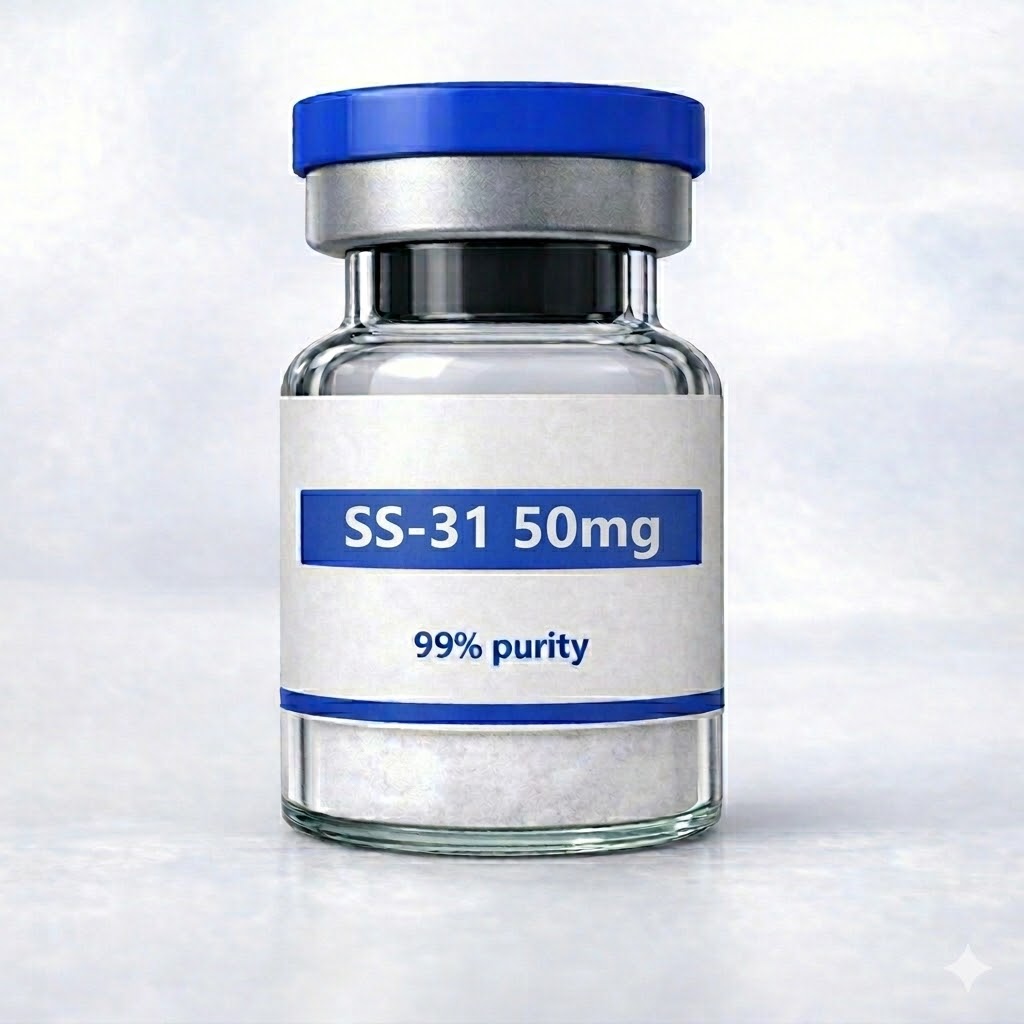
SS-31
Mitochondria are essential for eukaryotic cell activity and function, and their dysfunction is associated with the development and progression of renal diseases. In recent years, there has been a rapid development in mitochondria-targeting pharmacological strategies as mitochondrial biogenesis, morphology, and function, as well as dynamic changes in mitochondria, have been studied in disease states. Mitochondria-targeting drugs include nicotinamide mononucleotide, which supplements the NAD+ pool; mitochondria-targeted protective compounds, such as MitoQ; the antioxidant coenzyme, Q10; and cyclosporin A, an inhibitor of the mitochondrial permeability transition pore. However, traditional drugs targeting mitochondria have limited clinical applications due to their inability to be effectively absorbed by mitochondria in vivo and their high toxicity. Recently, SS-31, a mitochondria-targeting antioxidant, has received significant research attention as it decreases mitochondrial reactive oxygen species production and prevents mitochondrial depolarization, mitochondrial permeability transition pore formation, and Ca2+-induced mitochondrial swelling, and has no effects on normal mitochondria. At present, few studies have evaluated the effects of SS-31 against renal diseases, and the mechanism underlying its action is unclear. In this review, we first discuss the pharmacokinetics of SS-31 and the possible mechanisms underlying its protective effects against renal diseases. Then, we analyze its renal disease-improving effects in various experimental models, including animal and cell models, and summarize the clinical evidence of its benefits in renal disease treatment. Finally, the potential mechanism underlying the action of SS-31 against renal diseases is explored to lay a foundation for future preclinical studies and for the evaluation of its clinical applications.
ss-31 peptide
The kidneys are important metabolic and endocrine organs, and kidney disease is a global health concern that has resulted in high economic costs worldwide [1]. The kidneys, specifically proximal tubules, have a high mitochondria density due to the large amount of ATP required for solute reabsorption, blood waste product removal, and fluid and electrolyte balance regulation [2]. Mitochondria coordinate the tricarboxylic acid cycle and produce ATP through oxidative phosphorylation while releasing reactive oxygen species (ROS) [3]. ROS, as important upstream inducers of kinases and epigenetic factors, play a key role in cell signaling [4]. At low levels, ROS are important intracellular and intercellular signals necessary for maintaining kidney homeostasis and function; however, high ROS levels disrupt cellular balance and mediate oxidative stress damage, thereby causing apoptosis, inflammation, and fibrosis [5]. ROS are key factors involved in the development and progression of various renal diseases, including ischemia-reperfusion (IR) injury, drug-induced acute kidney injury (AKI), chronic kidney disease (CKD), diabetic nephropathy (DN), hypertensive kidney damage, and other glomerular diseases [6–10]. Considering that mitochondrial dysfunction leads to a decrease in ATP supply and excessive ROS production, which in turn triggers cellular damage, oxidative stress, apoptosis, inflammation, and fibrotic responses, moreover, renal diseases can also affect mitochondrial function through multiple pathways, including mitochondrial bioenergetics, membrane integrity, calcium homeostasis, and mitochondrial dynamics [11]. Therefore, for kidney disease treatment, protecting mitochondria may be more effective than targeting individual downstream events.
SS peptides are novel mitochondria-targeting antioxidants centered on alternating aromatic residues and basic amino acids, which were discovered fortuitously by Szeto and Schiller while carrying out studies on opioid receptors [12]. Among them, D-Arg-Dmt-Lys-Phe-NH2 (SS-31, also known as MTP-131, elamipretide, and Bendavia, collectively known as SS-31) was first reported in the early twenty-first century and has been extensively studied [13]. SS-31 has dimethyl tyrosine residues that interact with oxygen radicals forming unreactive tyrosine radicals. The tyrosine radicals couple together to form di-tyrosine, enabling it to scavenge oxygen radicals and inhibit linoleic acid and low-density lipoprotein oxidation. Further, SS-31 accumulates on the inner mitochondrial membrane, protects and restores mitochondrial structure, promotes ATP synthesis, reduces electron leakage and cardiolipin peroxidation, and has no effect on healthy mitochondria [14–16]. Thus, SS-31 exhibits protective effects against various diseases, including cardiac, neurological, respiratory, retinal, kidney, and aging-related diseases, as well as sepsis and diabetes [17–23]. However, to date, studies on SS-31 in renal diseases are limited, and its action mechanism remains explored. Moreover, a comprehensive summary and discussion of the existing studies are lacking. Considering this, this article reviews the pharmacokinetics of SS-31, its possible molecular mechanisms in the treatment of renal diseases, and relevant preclinical and clinical studies on SS-31, and finally discusses its potential targets in the treatment of renal diseases, with the aim developing a new management path in the renal field.
Be the first to review “SS-31 (2S50)”
Related products

PEPTIDES

PEPTIDES


PEPTIDES


PEPTIDES
PEPTIDES
PEPTIDES
PEPTIDES
PEPTIDES
Reviews
There are no reviews yet.