
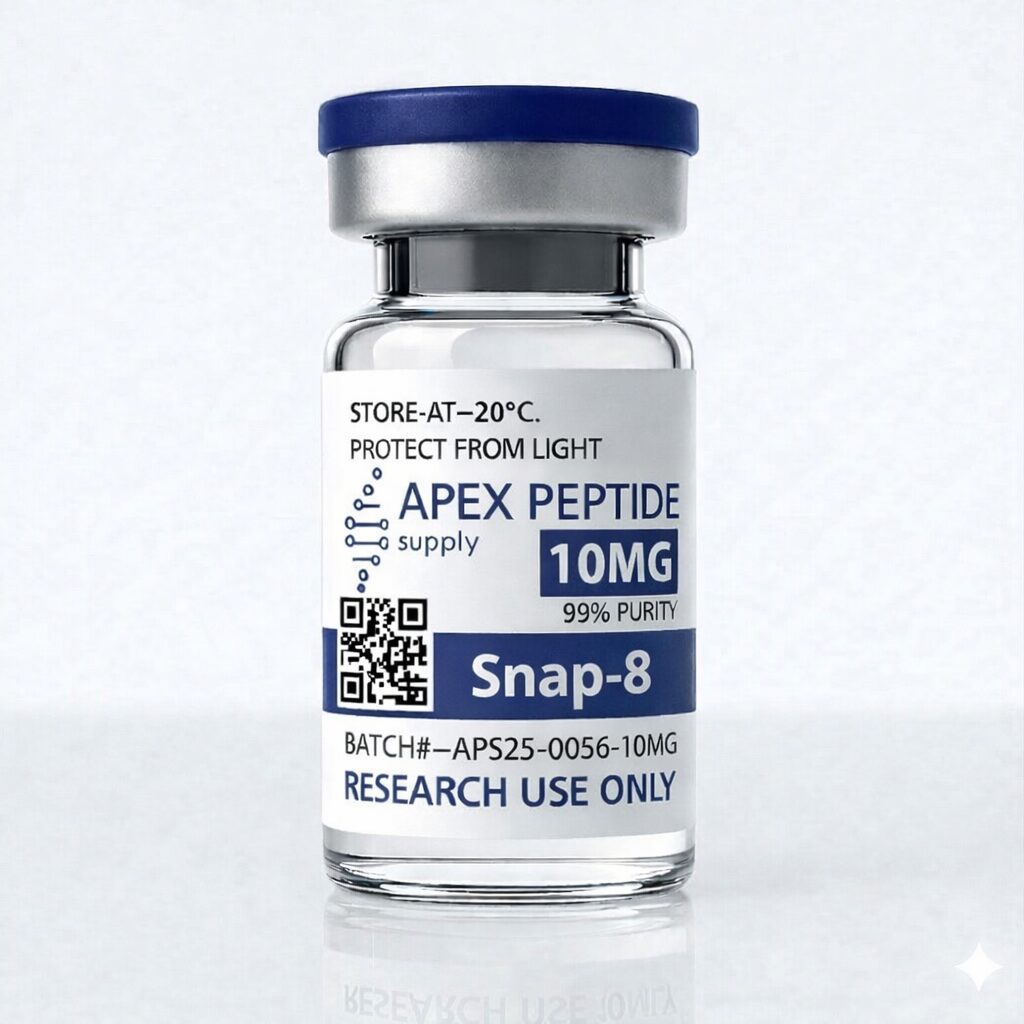

snap-8
Biomimetic peptides represent a growing class of active ingredients in modern cosmeceuticals, designed to mimic the function of the naturally occurring peptides involved in skin homeostasis, repair, and regeneration. Among them, acetyl hexapeptide-8 (AH-8), often referred to as a “botox-like” peptide, has received considerable attention for its potential to dynamically reduce wrinkles through the modulation of neuromuscular activity. AH-8 is widely used in topical formulations intended for anti-aging effects, scar treatment, and skin rejuvenation. This review provides a comprehensive overview of the structure and proposed mechanisms of action of AH-8, with particular focus on its efficacy and skin penetration properties. Due to its hydrophilic nature and relatively large molecular size, AH-8 faces limited permeability through the lipophilic stratum corneum, making effective dermal delivery challenging. Formulation strategies such as oil-in-water (O/W) and multiple water-in-oil-in-water (W/O/W) emulsions have been explored to enhance its delivery, but the ability of AH-8 to reach neuromuscular junctions remains uncertain. Preclinical and clinical studies indicate that AH-8 may reduce wrinkle depth, improve skin elasticity, and enhance hydration. However, the precise biological mechanisms underlying these effects—particularly the peptide’s ability to inhibit muscle contraction when applied topically—remain incompletely understood. In some studies, AH-8 has also shown beneficial effects in scar remodeling and sebum regulation. Despite promising cosmetic outcomes, AH-8’s low skin penetration limits its bioavailability and therapeutic potential. This review emphasizes the need for further research on formulation science and delivery systems, which are essential for optimizing the effectiveness of peptide-based cosmeceuticals and validating their use as non-invasive alternatives to injectable treatments.
1. Introduction
Skin aging is driven by both extrinsic factors (e.g., UV radiation exposure) and intrinsic factors (e.g., telomere shortening and the Hayflick limit), which occur simultaneously. Undeniably, aging affects the cells of the all layers of the skin. Histological changes related to this process are observable in the dermis, including collagen, elastin, and hyaluronic acid degradation; the increased production of matrix metalloproteinases (MMPs); and decreased fibroblast protein synthesis. Mechanical stress in the extracellular matrix contributes to the disintegration of dermal cells [1]. These changes manifest clinically as depressions in the skin following the course of facial muscles, commonly referred to as wrinkles. Aging skin is dry, loose, and less elastic, with a compromised supportive function of the dermis, leading to visible telangiectasia [2,3]. Cosmetic and pharmaceutical companies are competing to develop new substances to mitigate the clinical symptoms of skin aging. However, not all substances exhibit comparable in vivo and in vitro efficacy. In some cases, their structure and skin penetration limitations prevent them from reaching their target sites. Peptides, which resemble physiological molecules and induce various effects in the skin, are particularly intriguing for researchers, although transdermal delivery remains challenging.
The complex architecture of the skin allows it to perform diverse functions, including thermoregulation, sensory perception, metabolism, and immune defense. However, its primary role is as a barrier limiting access to internal tissues. The skin forms a bidirectional barrier, preventing water and electrolyte loss while blocking harmful substances and pathogens. The first layer of skin interacting with the environment is the epidermis, composed of tightly packed cells that form a mechanical barrier restricting the penetration of substances, including the active ingredients in cosmetics and drugs, which is the main obstacle to delivering active ingredients to the skin in the form of externally applied products [4,5,6].
Biomimetic peptides have emerged as important active ingredients in modern cosmeceutical formulations, offering targeted approaches to skin rejuvenation, hydration, and wrinkle reduction. These synthetic compounds are designed to mimic naturally occurring peptides in the skin and modulate specific biological processes related to aging and repair. As interest in non-invasive alternatives to aesthetic procedures continues to grow, such peptides have become widely incorporated into topical skincare products.
Despite their increasing commercial use and consumer interest, the understanding remains limited of their actual skin permeability, bioavailability, and mechanisms of action, particularly when applied in over-the-counter formulations. Many of these peptides are hydrophilic and of relatively high molecular weight, making effective penetration through the lipophilic stratum corneum a major challenge. This raises questions about whether the observed effects are due to biological activity in deeper layers or result from surface-level interactions or formulation-related benefits.
Be the first to review “SNAP-8”
Related products


PEPTIDES

PEPTIDES
PEPTIDES
PEPTIDES


PEPTIDES

PEPTIDES
PEPTIDES
PEPTIDES
Reviews
There are no reviews yet.