




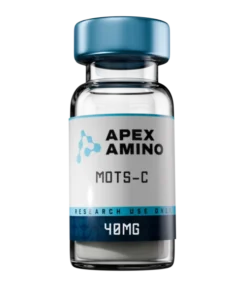

Mots-C 10mg
Intended strictly for research purposes only.
This research compound is provided in lyophilized form and packaged in a 3ml vial to ensure stability and reliable handling. Mots-C is prepared for research settings that require precise materials for controlled studies.
Supplied as lyophilized powder for extended stability
Packaged in a 3ml vial
Suitable for a variety of laboratory research studies
This product requires reconstitution.
Introduction
Mitochondria are organelles produced by archaea that are required for the production of ATP (1). The organism exhibits semi-autonomous genetic systems, independent genomes, and unique genetic codes that are similar to those found in bacteria (2). Recently, a short open reading frame (sORF) encoded in the mitochondrial genome has been discovered (3, 4). These sORF produce bioactive peptides, collectively known as mitochondrial-derived peptides (MDP), which have a wide range of physiological functions and can explain how mitochondria communicate within and between cells in a specific disease environment (5). Mitochondrial-derived peptides may answer the key biological problems that have plagued the field for decades (such as mitochondrial-nuclear communication, metabolic dysfunction, etc.) (6). Whether in the form of mitochondrial-derived peptide itself or in terms of sORF, mitochondrial-derived peptide is suitable for research as a therapeutic agent (1).
Studies discovered mitochondrial-derived peptide called MOTS-c has been shown to significantly reduce the level of pro-inflammatory factors in mice and increase anti-inflammatory factors and insulin-stimulated glucose treatment rates, as well as glucose homeostasis (7–9). Furthermore, human studies showed that exercise increased MOTS-c levels in skeletal muscle and blood circulation, indicating that MOTS-c is a mitochondrial-derived peptide induced by skeletal muscle exercise (9, 10). Additionally, more and more studies have revealed the importance of MOTS-c in regulating obesity and diabetes (11, 12), longevity (13), and cardiovascular disease (14). Specifically, this paper discusses the application of mitochondrial-derived peptides, including MOTS-c, in the treatment of diseases and anticipates the future development direction of MOTS-c combining synthetic biology to provide new ideas on how it can be developed and applied.
Be the first to review “Mots-C 40mg”
Related products
PEPTIDES
PEPTIDES


PEPTIDES
PEPTIDES

PEPTIDES

PEPTIDES
PEPTIDES

PEPTIDES
Reviews
There are no reviews yet.