


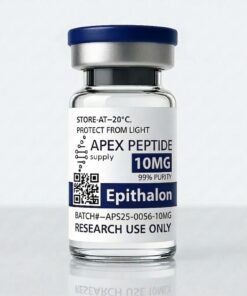
Epithalon
Growth hormone-releasing peptides (GHRPs) constitute a group of small synthetic peptides that stimulate the growth hormone secretion and the downstream axis activity. Mounting evidences since the early 1980s delineated unexpected pharmacological cardioprotective and cytoprotective properties for the GHRPs. However, despite intense basic pharmacological research, alternatives to prevent cell and tissue demise before lethal insults have remained as an empty niche in the clinical armamentarium. Here, we have rigorously reviewed the investigational development of GHRPs and their clinical niching perspectives.
Methodology:
PubMed/MEDLINE databases, including original research and review articles, were explored. The search design was date escalated from 1980 and included articles in English only.
Results and Conclusions:
GHRPs bind to two different receptors (GHS-R1a and CD36), which redundantly or independently exert relevant biological effects. GHRPs’ binding to CD36 activates prosurvival pathways such as PI-3K/AKT1, thus reducing cellular death. Furthermore, GHRPs decrease reactive oxygen species (ROS) spillover, enhance the antioxidant defenses, and reduce inflammation. These cytoprotective abilities have been revealed in cardiac, neuronal, gastrointestinal, and hepatic cells, representing a comprehensive spectrum of protection of parenchymal organs. Antifibrotic effects have been attributed to some of the GHRPs by counteracting fibrogenic cytokines. In addition, GHRP family members have shown a potent myotropic effect by promoting anabolia and inhibiting catabolia. Finally, GHRPs exhibit a broad safety profile in preclinical and clinical settings. Despite these fragmented lines incite to envision multiple pharmacological uses for GHRPs, especially as a myocardial reperfusion damage-attenuating candidate, this family of “drugable” peptides awaits for a definitive clinical niche.
Introduction
The family of peptidyl growth hormone (GH) secretagogues with broad cytoprotective properties came to light by the American endocrinologist Cyril Bowers, who observed that chemical analogs of enkephalin amide showed GH-releasing activity upon their incorporation to pituitary cultures. GHRP-6 (His-DTrp-Ala-Trp-DPhe-Lys-NH2) appeared as the first in-line synthetic peptide that specifically elicited GH dosage-related release in vitro and in vivo.1 Afterward, a heptapeptide, GHRP-1, and two other hexapeptides, GHRP-2 and hexarelin, were synthesized and addressed by basic and only sporadic clinical studies.
GH-releasing peptide (GHRP) family members began to be distinguished by their ability to prevent cardiac cell demise and to induce the restoration of critical cardiac functions upon ischemia/reperfusion episodes.2,3 A novel generation of promising cardioprotective agents had started to rise and set a bridge between endocrinology and cardiology.
Although the history of some of the foremost biomedical discoveries is permeated by serendipity,4 we deem that the well-established pivotal role of the GH/insulin-like growth factor-1 (IGF-1) axis for cardiomyocyte physiology, and the subtle alterations of this axis within the pathogenicity of dilated cardiomyopathy (DCM) and left ventricular (LV) dysfunction, ignited the idea of assessing the potentiality of GHRP to alleviate cardiac pathologies.5 It was far to be anticipated on those early days, however, that the GHRP-mediated cardiotropic and cytoprotective effects are superior to those shown by the exogenous administration of GH and are not shared by GH-releasing hormone (GHRH) and that, importantly, GHRPs exert their pharmacological actions via GH-independent pathways that obviously represented another turning point in this history.3
The progresses obtained and the experiences accrued along the years of work with these pioneer synthetic, nonendogenous GHRPs gradually led to the discovery of ghrelin, the 28-aminoacid hormone with GH-releasing action secreted by gastric cells6,7 with orexigenic, cardioprotective, and cytoprotective abilities for a myriad of cell populations.8–12
GHRP-6 is a small molecular weight peptide, effective when orally administered, stable, and economically low priced than others.13 Our observation that GHRP-6 intravenous administration proved to be safe in a dose scale-up clinical trial in healthy human volunteers is significantly important.14 Our demonstration that there is no in vivo pharmacological interaction between the peptide and a well-validated cardiovascular drug such as the beta blocker agent metoprolol is also relevant for GHRP-6 pharmacological “positioning”.15 Since for years, GHRP-6 has been the platform of our experimental work; we address particular attention to its investigational development as for hexarelin and GHRP-2.
Be the first to review “Epithalon (ET50)”
Related products

PEPTIDES
PEPTIDES
PEPTIDES


PEPTIDES

PEPTIDES


PEPTIDES


PEPTIDES
PEPTIDES
Reviews
There are no reviews yet.